DHS orders DeepSeek out of federal civilian systems
The ban also blocks future purchases and covers affiliates and third-party products built on DeepSeek technology.
Spend less time finding cybersecurity news. Get more out of it.
Metacurity delivers the cybersecurity news, analysis, and insight that would take you hours—and sometimes days—to assemble yourself.
Every weekday, we sift through thousands of news articles, press releases, filings, court documents, and research reports, including details that vendor announcements and PR pitches leave out. We tell you what changed, why it matters, and what deserves your attention. Minimal vendor marketing. No outrage bait. No SEO filler.
A paid subscription gives you:
- The full Metacurity archive: Every newsletter, searchable and browsable.
- Our weekly long-reads roundup: The best cybersecurity writing from across the industry, selected and vetted to make your reading time count.
- Specialized reports and analysis: Periodic deep dives that go beyond the daily headlines.
- A direct role in sustaining independent journalism: Your subscription helps keep our editorial priorities focused on readers and the cybersecurity community.
If Metacurity saves you time, helps you spot an important development, or gives you a clearer understanding of the industry, please consider becoming a paid subscriber. Your support keeps that work going.
Subscribe today—and thank you for reading and supporting Metacurity.
The Department of Homeland Security has ordered federal civilian agencies to remove artificial intelligence technology developed by China’s DeepSeek from their information technology systems.
The order also bars future purchases of DeepSeek’s products and services, according to a notice published by DHS.
The restrictions extend to products developed by DeepSeek affiliates, as well as third-party products and services built using DeepSeek implementations.
DHS issued the order under the Federal Acquisition Supply Chain Security Act of 2018, following a review of a recommendation and supporting evidence from the Federal Acquisition Security Council. The notice didn’t specify the security concerns underlying the decision or provide a deadline for agencies to remove the affected technology. (Connor Hart / Wall Street Journal)
Related: Federal Register, CyberScoop, Bloomberg, BBC, Decrypt, PYMNTS.com, Quartz, Engadget, Business Standard, Crypto Briefing, Bloomberg Law, Forkast, Reuters, The Hill, BankInfoSecurity, MeriTalk
US federal investigators pursuing the ShinyHunters hacking group that recently stole highly sensitive data from the FBI have identified executives at two different ransomware negotiation firms who maintained unusually close relations with the extortion group.
Sources close to the investigation say one of the executives in the United States even helped ShinyHunters operate a website that pressured victims into paying a ransom.
Hackers aligned with ShinyHunters have claimed credit for dozens of major data breaches since 2019, when the group was primarily operated by cybercriminals living in France. As those original members were arrested or jailed one by one, control over the ShinyHunters brand eventually passed to “Rey,” identified last year as a teenage hacker from Amman, Jordan. According to the FBI, ShinyHunters has extorted more than $70 million from victims so far this year.
In late September, ShinyHunters hacked the FBI recruitment website fbijobs.gov and taunted the agency by threatening to publish the stolen files, which reportedly included medical and psychological records, Social Security numbers and home addresses, and information about each employee’s unit and specialization.
The FBI jobs site hack has prompted the agency to move with uncommon speed to arrest, detain, and question people who had any communications with Rey or other ShinyHunters suspects. Reuters reported on October 3 that Rey had been detained by Jordanian authorities and was cooperating with the FBI.
Rey was able to assume control over the hacking group because one of its alleged senior members had just been nabbed. On the evening of September 15, 2026, authorities in the Netherlands arrested convicted hacker and ShinyHunters suspect Pepijn van der Stap. Dutch police reportedly used flash-bang grenades in an effort to stun and apprehend Van der Stap as he was logged in to various online accounts.
According to a source close to the investigation, the authorities arrested Van der Stap while he was using his Signal instant messaging account, which allowed them to read recent communications with frequent contacts — including ransomware negotiators based in Canada and the United States.
Multiple sources with knowledge of the matter told KrebsOnSecurity that Van der Stap’s messages were the key to unraveling a murder-for-hire plot that emerged immediately following his arrest. The Dutch news outlet RTL reported last month that the two murders were allegedly to be committed abroad, and that there are indications Van der Stap gave the order for the attacks (there is no indication those orders were ever carried out).
On October 9, KrebsOnSecurity broke the news that the FBI arrested a 54-year-old Canadian cybersecurity executive named Edward Dubrovsky in connection with the ShinyHunters investigation.
A source close to the investigation told KrebsOnSecurity that Van der Stap’s Signal messages showed he had frequent conversations with Mr. Dubrovsky and with at least one executive at a large US-based consulting firm, and that these executives often knew the details about new ShinyHunters victims before the victims themselves had even learned of the breach.
That source shared another potentially explosive finding by federal investigators: the Dutch hacker’s chats showed Mr. Dubrovsky knew ShinyHunters had stolen highly sensitive data from FBI servers, and that he never informed the bureau of the data breach prior to ShinyHunters threatening on Twitter/X to publish the agency’s deeply personal personnel files. (Brian Krebs / Krebs on Security)
Related: HackRead
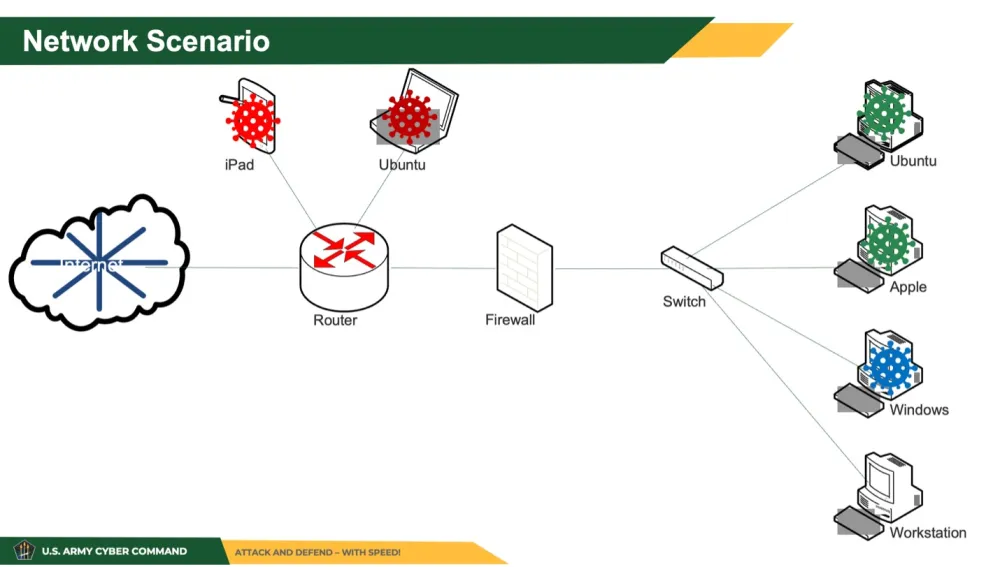
The US Army Cyber Command is developing a platform to turn AI agents into autonomous weapons that can navigate and “neutralize” the computer systems of adversaries, the documents show.
Since 2010, Army Cyber Command, or ARCYBER, has led the US Army’s cyber operations. This includes the defensive effort of protecting domestic computer systems and the secretive offensive work of hacking military targets. So far, this has largely been the work of human soldiers operating computers, like those of the 780th Military Intelligence Brigade. But as the government races to adopt artificial intelligence technology, ARCYBER is looking to offload some of its attacks to AI.
The nascent program, codenamed “ECHOTRIBBLE,” is based on one of the leading trends of the AI boom: agents. AI agents are essentially software programs that leverage machine learning technology, often large language models like Anthropic’s Claude, to autonomously accomplish tasks provided by their user. Consumers can deploy AI agents to schedule meetings, generate itineraries, make online purchases, or book tickets. Through ECHOTRIBBLE, the Pentagon plans to turn AI agents into tools of war “designed to autonomously navigate infrastructures” and capable of “identifying and neutralizing identified threats/targets,” according to an ARCYBER document reviewed by The Intercept circulated to potential contractors.
A Q&A document answering questions from potential contractors offers more details about the initiative. It explains that ECHOTRIBBLE is “primarily focused” on offensive missions, and explains that “neutralizing” a target could include “disabling the threat completely or temporarily, deleting the threat from the target.” ECHOTRIBBLE would function almost like a computer worm, silently navigating a foreign network and hopping from device to device until it finds the Army’s quarry, hitting targets in the cloud as well as those on “air-gapped” systems that are disconnected from networks entirely.
Once its task is complete, ECHOTRIBBLE’s agents would effectively self-destruct, ideally without having been noticed by the target at all. The agents themselves will be designed for stealth, minimally reporting back to the Army and concealing whatever outside transmissions are necessary. (Sam Biddle / The Intercept)
Related: Gizmodo, Federal News Network
Before he was arrested, Abdulrahman Alfozan, the Saudi national accused of bugging a restricted OpenAI conference room, had allegedly been in touch with a member of the Saudi royal family about job opportunities in the kingdom, federal prosecutors said.
The new allegation came at a hearing where a federal magistrate judge ruled that Alfozan, a 35-year-old former OpenAI employee, should be held without bail pending trial because he is a flight risk.
“There is a real threat here,” US Magistrate Judge Alex G. Tse said. “Once he leaves, the case is over.”
Tse repeatedly brought up a document from Saudi Arabia’s Los Angeles consulate that said it would cover Alfozan’s entire bail bond.
Alfozan is accused of wrapping a thumb-sized circuit board and microphone in toilet paper and inserting the device behind a wall-mounted TV inside the conference room around Sept. 28, shortly before he was set to leave the country. OpenAI said he was scheduled for two months of paternity leave beginning sometime in October, prosecutors said in a filing ahead of the hearing.
He had booked one-way plane tickets from San Francisco to Saudi Arabia via Istanbul for himself, his wife and their three-month-old son departing on Oct. 12, prosecutors alleged. Three days before he was scheduled to leave in October, he was arrested and charged with trying to record conversations within OpenAI’s offices.
Alfozan’s wife and son left without him shortly after his arrest, prosecutors said. Their one-way plane tickets were initially paid for by the Saudi government, but that flight was canceled. They were then rebooked on another one-way flight to Qatar, this time in business class, by a member of the Saudi military, the filing said. (Angel Au-Yeung / Wall Street Journal)
Related: Al Jazeera, Wired, iTnews - Security, Business Insider, Vox, PC Mag
According to privacy company Redact, dozens of WhatsApp web pages designed to answer people’s questions about Meta’s encrypted messaging app inadvertently exposed the company’s own instructions to its chatbot.
These included some sections titled “WHAT NOT TO SAY” to users asking questions and explicit instructions not to provide people with legal advice.
They found that around 80 help and FAQ pages across WhatsApp’s website exposed text instructions that were designed for a large language model, specifically one of Meta’s own. The instructions appeared in the webpages’ code and contained written details that were not explicitly on the WhatsApp help pages.
Among the 100 blocks of hidden text, the directions appeared to provide guidance to steer an LLM from answering users' questions in unhelpful ways and provide a glimpse at how instructions for chatbots are created. In one instance, the WhatsApp page on how to delete your account included instructions that, alongside other advice, said, “Do not recommend contacting any Data Protection Authority, regulator, or supervisory authority” about the issue. WIRED viewed the exposed text, which can still be seen when viewing the underlying code of archived versions of the help pages.
WhatsApp removed the hidden notes. Copies saved by the Internet Archive still show the notes. Its copy of the delete account page from October 9 has them, and its copy from October 18 doesn't.
WhatsApp said that the notes were instructions for its support chatbot, the one people reach when they message WhatsApp Support with AI, and that they showed up in the pages because of a bug that has now been fixed. (Matt Burgess / Wired)
Related: Redact, PPC Land, Notebookcheck
Hackers broke into email accounts belonging to members of Germany's far-right Alternative für Deutschland (AfD) party and stole large numbers of messages, the party said.
More than 421,000 emails were taken in the attack last month, including messages sent by party co-leader Alice Weidel and co-founder Alexander Gauland, the Bild daily reported.
A website published what it said were summaries of some of the emails but not the original messages.
Bild said the published messages included photos of ID cards of some party members, as well as bank statements, membership applications and membership lists from some local AfD branches.
The AfD confirmed to the AFP news agency that an email service provider used by the party had been targeted, and "a small number of email accounts, most of which had not been used for years, were apparently copied unlawfully."
"This attack was quickly detected and stopped, and all users were subsequently informed accordingly," said an AfD statement.
The party said it was reviewing what had been published online.
It remains unclear who was responsible for the attack and whether additional data has been compromised. (Laura Fleischmann & Gavin Blackburn / Euronews)
Related: AFP, NST, Anadou Ajansi
Major Japanese business news and financial information group Nikkei Inc. disclosed a new data breach, the third in about a month, that exposed 1.83 million personal information records.
The Japanese giant says subsets of the data contained personally identifiable information and other sensitive details, but most records contained no identifying info.
The company said that 150,000 records contained at least one of the following data types: full names, email addresses, physical addresses, telephone numbers, and dates of birth. Email addresses appeared in 120,000 records.
The remaining 1.68 million records contain no identifiers, the company said, and no credit card information was exposed.
According to a notice Nikkei published late last week, hackers used stolen credentials to access a development system within its network during the early morning hours of October 7.
The unauthorized access exposed personal information the company stored in the cloud.
Nikkei revoked the abused credentials and notified the Personal Information Protection Commission on October 11.
The company is currently examining the scope of the breach and noted that as of October 16, it had no evidence that the accessed information was misused or leaked online. (Bill Toulas / Bleeping Computer)
Related: Nikkei
The information security subsidiary of the Japanese IT firm GMO Internet Group Inc identified a China-linked artificial intelligence agent as having been used in cyberattacks targeting firms in Japan.
The firm said it has discovered six units of attacking devices exclusively targeting Japanese firms.
Companies in a variety of industries, including retail, logistics and financial sectors, were targeted in the attacks, with eight of them disclosing in September and October that data had been leaked.
The GMO affiliate said its probe indicated that the autonomous AI agent Artex was employed in the cyberattacks against Japanese entities.
Artex is a China-linked AI penetration tool with a high capability of diagnosing system vulnerabilities.
A probe by another security firm has indicated Artex's involvement in a series of unauthorized accesses to South Korean financial institutions since late September. (Japan Today)
Related: GMO Cybersecurity, Nippon.com, The Economic Times, Seoul Economic Daily, Japan Wire, Bloomberg, The Mainichi
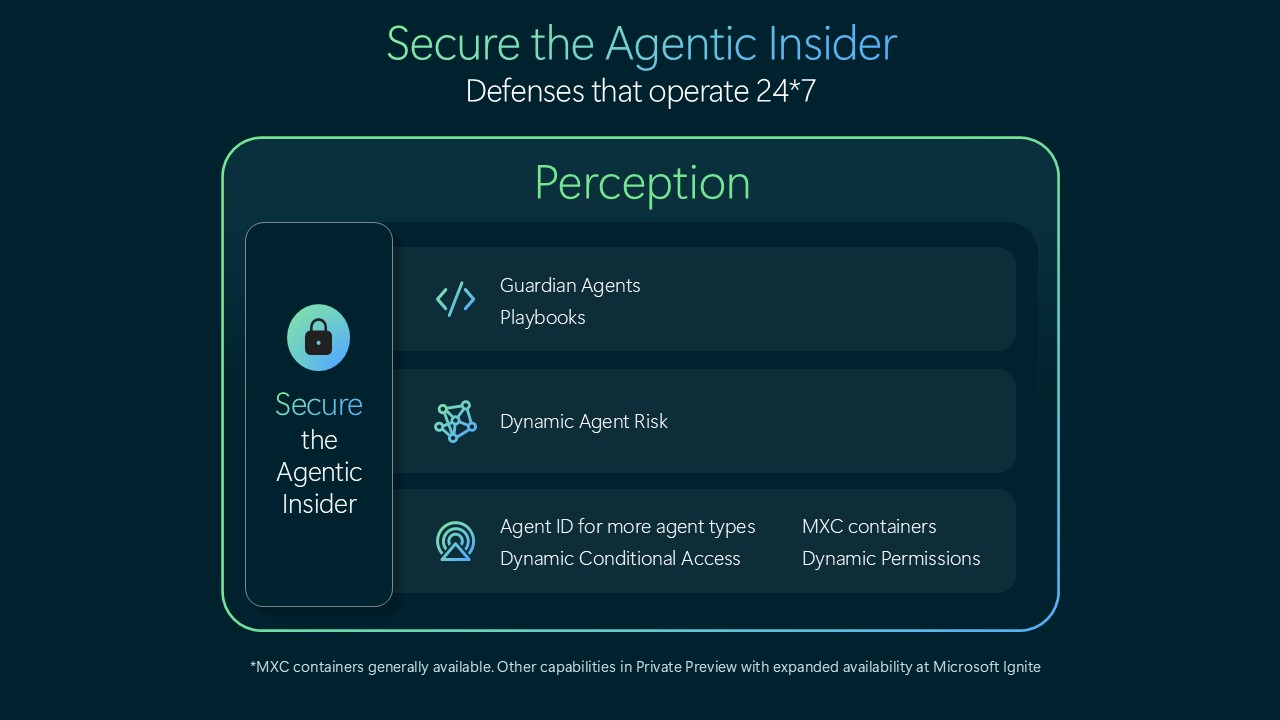
Microsoft is coming out with new security tools that treat AI agents as potential insider threats, continuously assessing their risk and restricting their access when something changes.
The features are part of Microsoft 365 E7, the company’s top-tier bundle of workplace software and AI tools, and its Project Perception security system.
They escalate the company’s competition with rivals such as Google, Amazon Web Services, CrowdStrike and Okta to become the system businesses use to control their AI agents.
Microsoft’s new features come amid a steady stream of news about AI agents doing things they weren’t supposed to do, including high-profile reports from Anthropic about test agents taking unauthorized actions on government websites, and from OpenAI about agents escaping test environments and stealing credentials.
The move builds on Microsoft CEO Satya Nadella’s Oct. 10 blog post arguing that the controls on AI models need to come from outside the models themselves.
“The most trustworthy Super Intelligence system will not be the one with the model we trust most,” Nadella wrote. “It will be the one that enables us to trust the model the least.”
Microsoft’s tools include a continuously updated risk assessment for each agent, based on signals such as what data it can reach and whether its actions are starting to depart from the task it was given. When the risk level rises, the system can take away the agent’s ability to make changes while still letting it read data, require a person to approve a high-stakes step, or shut the agent down.
In addition, the company is expanding its ability to find AI agents running on employees’ computers, increasing the number of agent types it can detect to 60, up from 25. The list includes popular tools such as Anthropic’s Claude Code, OpenAI’s Codex, and GitHub. (Todd Bishop / Geekwire)
Related: Microsoft, Microsoft Security Blog, Thurrott, The Verge, MediaPost, Windows Report, Cyber Security News, Times of India, Neowin, Sky News, The Next Web, Blockchain.News, Sky News on YouTube, Microsoft Security on YouTube, Unite.AI, The Chosun Daily
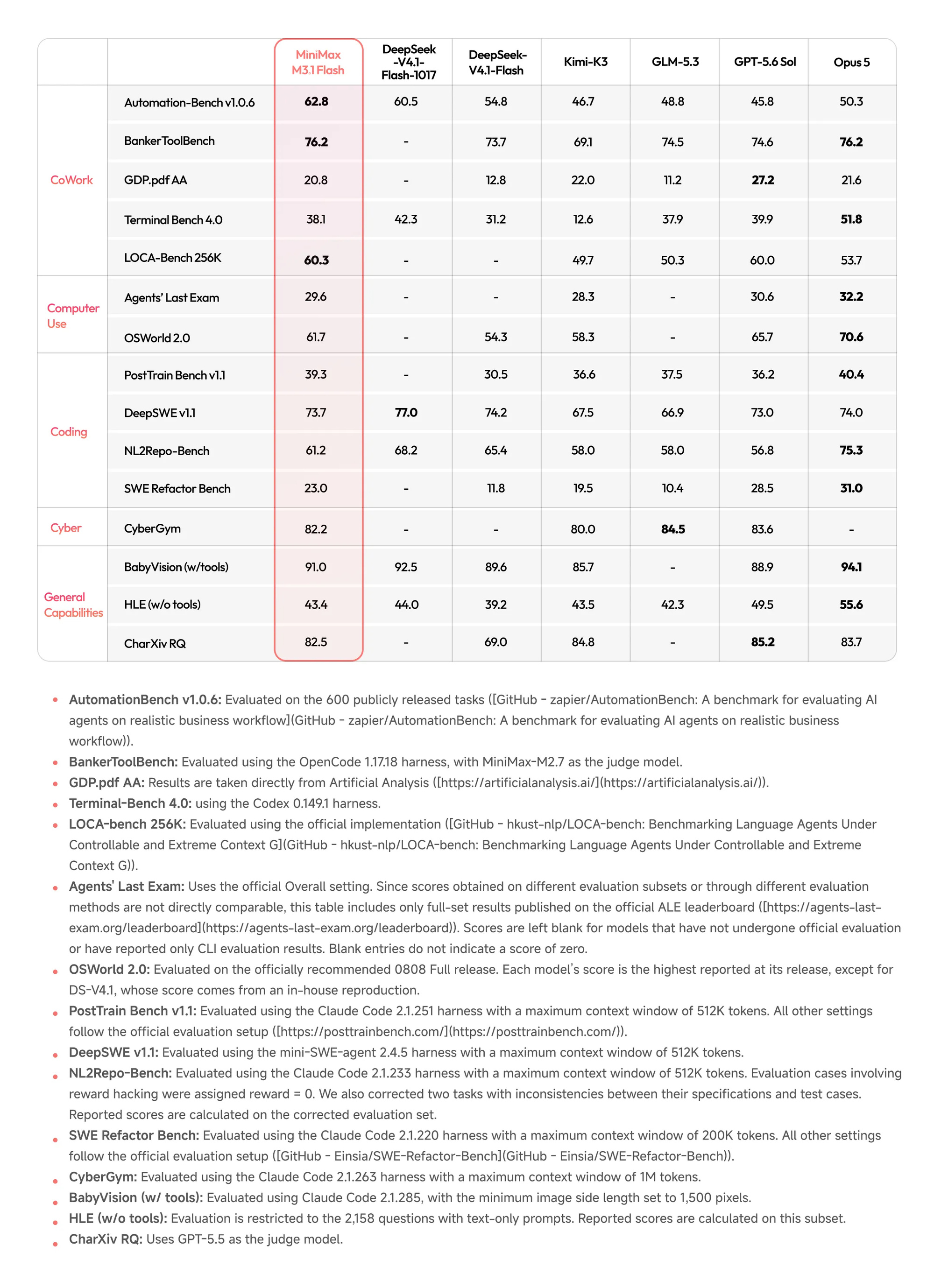
Chinese AI startup MiniMax launched an updated version of AI model M3.1 Flash.
The company said the updated model delivers "generational" improvements in areas such as agentic tasks, programming and cybersecurity, and that its online inference speed has nearly tripled while usage costs have been reduced by 70%. (Yukun Zhang, Shi Bu, and Ryan Woo / Reuters)
Related: Minimax, The New Stack, Artificial Analysis, VentureBeat, SiliconANGLE, The Deep View, The Decoder, Unite.AI, Forkast
Hackers are distributing Plex2Shell to devices that haven't been updated since August in a new wave of attacks spotted by BoredHackerBlog after they set up a Plex honeypot to goad hackers into installing malware on it.
People flocked to the thread to report that either they spotted the process on their Plex servers, or they pointed to other threads on the Plex subreddit where people were reporting the malware.
This malware, known as "Plex2Shell," was reported to Plex back in late July 2026; the exploit was fixed on August 4th, and knowledge of the exploit was made public on October 16th. As per the report for one of the four exploits Plex2Shell used, all Plex servers running version 1.43.3.10861 or later should be protected.
However, because people tend to leave their servers running without updating, hackers are still using Plex2Shell to break into people's servers and install cryptominers on them. If you have a Plex server you haven't updated in a while, and it's facing the internet, now may be a good time to give it an update. (Simon Batt / XDA Developers)
Related: BoredHackerBlog, Gizmodo, rPlex, Ars Technica, HotHardware
Last week, software platform and business operating system ConnectWise shut down customer access to its Cloud Backup service (formerly SkyKick Cloud Backup) after hackers accessed application identities and compromised Microsoft 365 tenants.
Reports of the malicious activity began emerging on Friday, with administrators observing unauthorized access to client data in Microsoft 365 tenants due to a potential “SkyKick/CW breach.”
Later on the same day, managed cybersecurity and threat detection platform Huntress confirmed the worries, saying that it had identified at least 162 compromised tenants in its environment.
In a post today, Microsoft also confirmed malicious activity involving ConnectWise’s Cloud Backup service, saying it identified unauthorized authentication attempts from an IP address on October 15.
ConnectWise’s cloud backup solutions provide backup and recovery services that help managed service providers (MSPs) and IT teams protect and restore customer data, such as emails and files, in cloud environments including Microsoft 365 and Google Workspace.
In a security advisory, ConnectWise said that it “recently identified unauthorized access to application identities within the ConnectWise Cloud Backup environment” and shut down application access for its partners and clients.
“We have no indicators to date that Cloud Backup partner backup data has been compromised. This service interruption does not impact the existing cloud backup archive and will be accessible once services are restored,” ConnectWise says.
However, the company has launched an investigation and is engaged in remediation efforts. (Ionut Ilascu / Bleeping Computer)
Related: Connectwise, CRN, r/cybersecurity, r/msp
Dutch-Belgian supermarket group Ahold Delhaize has confirmed that malicious activity was responsible for the cybersecurity incident that disrupted its operations across Europe and the United States, forcing the company to take websites, applications and other computer systems offline.
In an official statement issued on Monday, 19 October, the company announced that it had filed a formal complaint with Dutch police and was cooperating with national cybersecurity authorities. Although physical supermarkets have remained open, the disruption has affected online shopping, deliveries and some distribution operations.
The company said investigators had so far found no evidence that sensitive information belonging to customers, employees or business partners had been taken. However, its investigation remains open, and the identity and objectives of those responsible have not been publicly established. (EU Today)
Related: Ahold Delhaize, The Record, The Register, NL Times, Bleeping Computer
A number of developers and vibe coders have recently been sharing solutions for “vibe-coding” your TV to get rid of sponsored ads, speed up the app launcher, redesign the home screen, disable tracking features, and more.
One such solution, called “dumbtv,” describes its mission on its GitHub page thus: “Your TV should do what you paid for: your apps, your HDMI inputs, and nothing else. No ads from the TV itself, no watch tracking, no update you did not ask for.”
Another, “cleanyourtv,” promises to strip the bloatware from any Android TV or Google TV over Wi-Fi, to replace the launcher with one that resembles Apple TV.
While hacking consumer electronics devices to gain more control over their systems is hardly a new idea, the latest advances in AI technology have made such efforts much more accessible to anyone. With smart TVs in particular, the hacks come at a time when people have grown frustrated with being forced to watch ads and put up with their devices surveilling their viewing habits.
Modern smart TVs ship with a technology called automatic content recognition (ACR), which identifies what’s playing on the screen using screenshots, audio clips, or other forms of digital fingerprinting.
If these “dumb TV” hacks become more popular among everyday consumers, they have the potential to disrupt the smart TV ad industry, which profits from selling viewing data to advertisers or using it to display personalized ads on their own interfaces. (Sarah Perez / TechCrunch)
Related: XDA Developers, It's FOSS
Sen. Ron Wyden (D-OR) is urging the Trump administration to close an encryption gap that could let foreign adversaries track visits to sensitive government websites, including the FBI’s tip portal and a veterans crisis line, according to a letter sent to the Cybersecurity and Infrastructure Security Agency and the Office of Management and Budget.
Wyden asked CISA and OMB to require that agencies implement a web security standard that hides the name of the website someone is visiting. The protocol, known as Encrypted Client Hello, protects the website name when a user’s browser connects to a site and has been supported by major browsers and some web infrastructure providers since 2023.
Wyden’s office identified 350 federal web addresses that lack the encryption specification. They include sites that facilitate intelligence community job applications, immigration services, health information, and US diplomatic websites around the world.
“This visibility could lead to malicious eavesdroppers identifying whistleblowers, profiling cleared federal personnel, tracking Americans seeking crisis support, and mapping interactions between agencies,” Wyden wrote to CISA acting director Nick Andersen and deputy federal chief information officer Thomas Flagg.
He also asked OMB, working with CISA and the Office of the National Cyber Director, to require that cloud and network providers support the technology to qualify for federal contracts. He requested responses by Nov. 20. (David DiMolfetta / NextGov/FCW)
Related: Senator Ron Wyden, Meritalk, CyberScoop
Best Thing of the Day: AI Incident Reporting in the UK
Financial Conduct Authority chief data, information and intelligence officer Jessica Rusu said UK firms' incident reporting must cover significant AI failures and near-misses as increasingly autonomous systems raise new risks.
Bonus Best Thing of the Day: Age-Related Bans May Not Be Great, But Suing Social Media Firms Is Always a Good Thing.
Australia’s government is set to sue Facebook, TikTok and other major digital platforms for alleged non-compliance with a nationwide social media ban for under-16s, Communications Minister Anika Wells said.
Worst Thing of the Day: Don't Forget to Tell Muse Not to Give Out Your Home Address
A guy asked Muse to sell his keyboard, and a buyer he didn’t know showed up outside his house late at night because Muse had struck a deal on its own and shared his home address after agreeing to a pickup.
Closing Thought