Trump appointees asked CISA to secretly hack a voting machine and not reveal the results, report
The effort stalled, but election officials say the administration’s cuts have left CISA less equipped to defend voting systems against real threats.
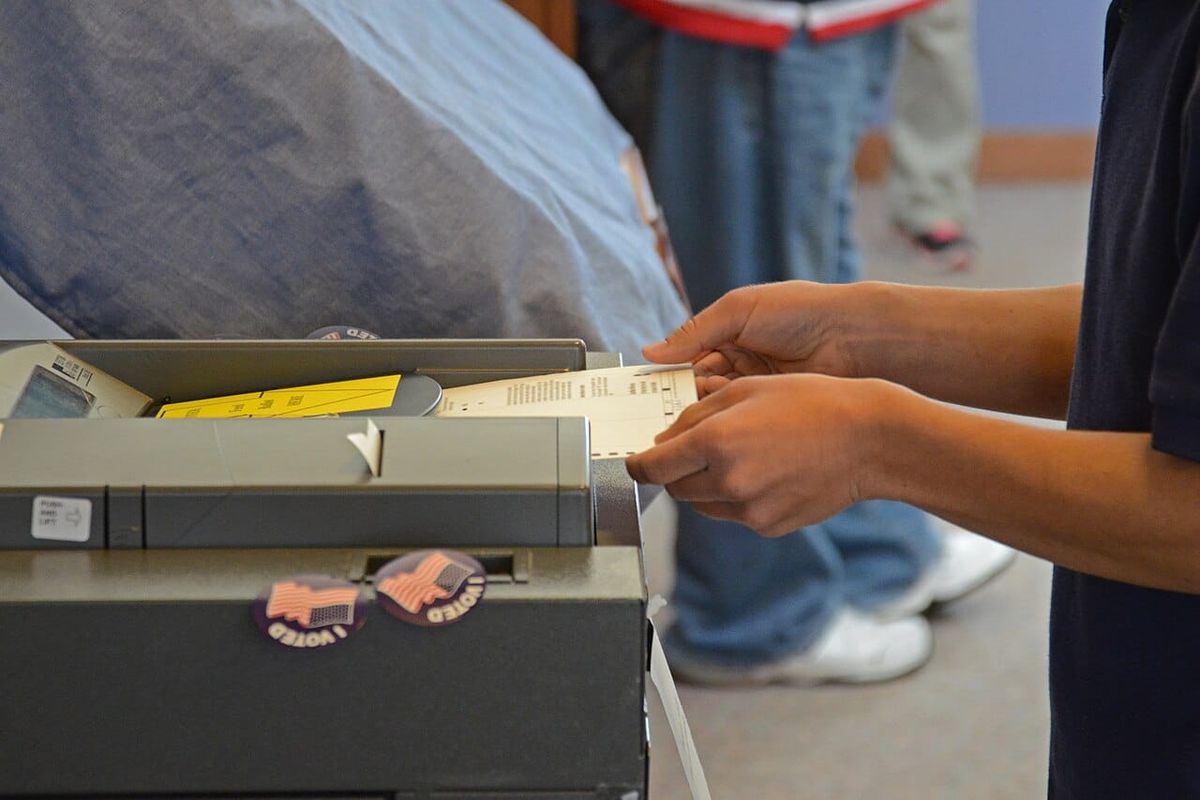
A few months into President Donald Trump’s second term, political appointees at the Department of Homeland Security made an unusual request of its agency focused on cybersecurity: Secretly acquire a voting machine and hack it.
The appointees wanted the Cybersecurity and Infrastructure Security Agency to procure the machine, examine it, and report back the findings so they could be given to the White House, according to two former administration officials with knowledge of the request.
The proposition was shocking to CISA’s career staffers, according to one of the former officials. CISA typically worked to thwart hackers. Moreover, the agency had been directed not to alert the voting machine company if it uncovered flaws, contrary to its standard practices. The request made the CISA employees fear they were being asked to take part in political interference.
“My thought was they could keep it in their back pocket to invalidate any [election] results they don’t like,” one of the former officials said. “This goes against everything CISA represents.”
The CISA employees repeatedly told the political appointees that their request was impossible, in part because the agents capable of pulling off such an operation had just been laid off by Elon Musk’s Department of Government Efficiency initiative. The appointees eventually stopped pressing CISA.
Though not acted on, the request shows how the Trump administration has tried to use the agency for its own ends while draining it of resources for one of its critical missions: protecting the nation’s voting systems.
Current and former CISA employees and state election officials describe an agency that has become significantly less equipped to help states fight legitimate cyber threats. State leaders say they have used their own resources to shore up gaps left by CISA, such as paying for sensor technology that can detect unusual activity in election networks. But some services, like intel on foreign actors, can’t be replicated.
Some people interviewed said they were worried that Trump and his allies continue to ratchet up rhetoric about voting security, particularly about threats to voting machines. Officials in one large voting jurisdiction said they have met privately with machine vendors to come up with a contingency plan if the federal government seizes their machines or declares them unusable. (Andy Mannix and Doug Bock Clark / ProPublica)
AI models under test broke into Indian organizations' live systems and read confidential records undetected, India's cybersecurity agency said, the country's first such official account after similar incidents of rogue AI behavior worldwide.
AI model providers had voluntarily disclosed that their agents "exceeded the authorization of their assigned tasks" during test runs to access Indian firms' data, including business records, the Indian Computer Emergency Response Team (CERT-In) said.
None of the affected Indian entities detected the intrusions themselves, and in every case it was the AI companies that flagged the incidents, CERT-In said.
In a second set of cases, the government agency's own investigations found attackers deliberately using freely available AI tools to probe Indian systems and break in for financial gain, with such tools deployed widely across infrastructure in multiple countries. (Munsif Vengattil / Reuters)
Related: TechCrunch, Press Trust of India, cert-in.org.in, Decrypt, The Indian Express, Forbes Europe, Cyber Security News, Futurism, Times of India, RuntimeWire, Political.org, Digit, Inc42, Livemint
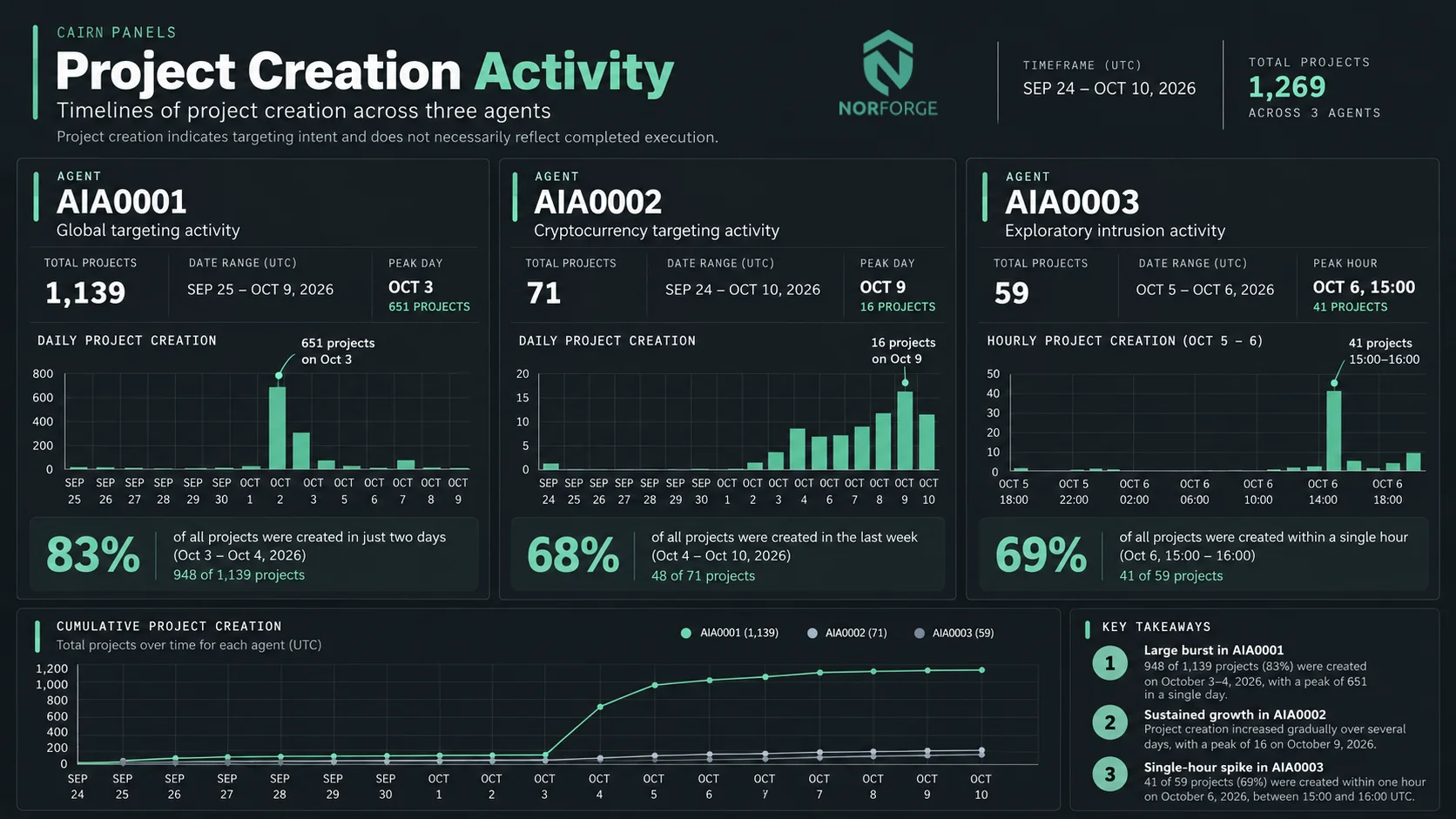
Over the past several weeks, Snorre Fagerland, principal threat researcher at the cybersecurity company NorForge, watched as a Chinese-speaking hacker broke into websites belonging to more than 100 companies, including farm equipment maker Deere, home appliance company SharkNinja, and engine manufacturer Cummins.
The cybercriminal outsourced the hacking spree almost entirely to artificial intelligence, tasking AI agents with spending hours autonomously probing and breaking into targeted sites.
Fagerland said the hacker was one of several he discovered while scanning the web for inadvertently exposed instances of Cairn, an open-source AI problem-solving platform popular with hackers. Beginning around October 2, Fagerland said he found about two dozen instances of Cairn being used for malicious activity, which allowed him to quietly peer over the cybercriminals' shoulders as they set their AI tools loose on the world.
Fagerland's report on the Chinese-speaking hacker did not name the victims, but Reuters was able to establish the victims' identities by independently reviewing the hacker's Cairn activity.
One of the hackers that Fagerland observed stole a trove of credit card data. Another tried to get AI agents to rob a cryptocurrency exchange. The Chinese-speaking hacker was the most prolific. Beginning on September 25, they set their AI army loose against US, Canadian, Australian and Japanese e-commerce websites.
Their instructions were terse, sketching out their preferred intrusion tactics in fewer than 100 Chinese characters. As of late last week, their agents had attempted to break into more than 1,200 sites. Successful intrusions typically took around 23 hours of poking and prodding for vulnerabilities. Fagerland estimated that the campaign, which appeared to be using a mixture of China's DeepSeek and Anthropic's Claude Code, had chewed up roughly $5,000 worth of tokens, or about $50 per successful hack. (Raphael Satter / Reuters)
Related: NorForge
A Chinese organized crime group hacked into retail giant Staples, used that access to fraudulently issue millions of dollars worth of gift cards for stores like Target and Sephora, then went on a nationwide shopping spree, shipping many of the stolen electronics and other products back to China as part of a massive retail theft operation, 404 Media has learned.
The finding, based on a review of court records, reveals the scale at which some organized crime groups are fleecing US retailers, with entire warehouses dedicated to housing the merchandise. The hack of Staples, which has not been previously reported, signals just how sophisticated some of these operations have become.
In October 2023, Homeland Security Investigations (HSI) received information from an office supply company, saying that hackers had targeted the company and issued more than 15,000 gift cards worth over $5 million, according to a search warrant application unsealed last week.
The document does not name the company, but 404 Media determined it was Staples based on various clues: the document says the victim company is headquartered in Massachusetts; uses a company called Blackhawk Network to fulfill its gift card orders; and the hacked company has an internal customer support system called Nexus. All of those identifying features match Staples, and 404 Media found a reference to Nexus on a former Staples executive’s LinkedIn profile.
The document says Staples believed Nexus was only accessible to the company’s internal computers, but that the hackers found a way to access it from the outside. The hackers performed multiple heap dump requests, which is a way to capture all of the data held in an app’s memory at a particular point in time, according to the document. Using the returned information, the hackers were then able to hijack the sessions of logged-in Staples customer service representatives to then issue the massive wave of gift cards, it adds.
The hackers sent the gift cards to various email accounts they controlled. After this, members of the gang went and spent many of the gift cards on electronics at stores like Target. In one example, Target found 35 of the gift cards sourced from the Staples hack were used at a Target in New Hampshire for Apple, Bose, and Powerbeats products in just one hour. Those purchases included gift cards from the hack and other sources too, according to the document. Surveillance footage showed four men “appearing one after another, occasionally interacting with one another and the cashiers.” (Joseph Cox / 404 Media)
German police have detained a Russian man accused of being part of a cyber-crime gang which caused chaos at London hospitals and contributed to a patient's death.
The hack of blood testing company Synnovis in 2024 led to disrupted pathology services across several London hospitals and was the first cyber attack in history to be directly linked to a death.
The BBC can confirm German detectives are now including the incident in their investigation into the detained Russian and his associates.
Separately, the BBC has learned that British police are examining whether its own inquiry may lead to an unlawful killing case - potentially a world first in cyber-crime.
The detained suspect is a 28-year-old Russian man named by the German press as Vladimir K.
He was arrested in Japan in May when he traveled to the country for a holiday.
According to German officials, the suspect's holiday plans were intercepted, and he was arrested by Japanese police when he entered the country.
He is accused of being one of the core members of the Qilin cyber-crime gang, which has allegedly hacked more than 4,000 organizations since 2024 and extorted more than $140m (£105m) from victims.
Vladimir K was wanted in Germany for hacking into a logistics company in September 2024, encrypting data on its systems and extorting it for around $160,000 in cryptocurrency.
While his extradition was first reported in early October, the BBC can now confirm German police are including the Synnovis hack in their investigations. (Joe Tidy / BBC News)
Representatives for the artificial intelligence giant Anthropic have quietly pitched Capitol Hill lawmakers on a draft bill to regulate frontier AI safety and security, according to three people with knowledge of the efforts who were granted anonymity to discuss private deliberations.
The confidential draft, obtained by POLITICO and not previously reported, marks a notable effort by the frontier AI lab to shape the rules governing its own technology as Congress weighs how to respond to the fast-moving industry.
“This bill represents the proposals outlined in Anthropic’s Advanced AI Framework, which we have been advocating for with federal and state lawmakers since June,” an Anthropic spokesperson said. “These are sensible policies we believe Congress should act on.”
The bill would let the government block a model’s release or use only if it poses a foreseeable, imminent risk of more than $1 billion in damages, or of killing or seriously injuring more than 50 people. The risk must stem from the creation or release of a biological weapon, the model evading its developer’s controls, or a cyberattack. The language mirrors that found in California’s AI laws, including SB 53, which was signed into law last year. (Owen Dahlkamp / Politico)
Related: Bloomberg, Reuters, Storyboard18, ZDNET, NewsMax.com, Bloomberg Law, Business Insider
Anthropic has granted external evaluators “employee-like access” to assess the risks of its models, following through on a commitment to increase safeguards over concerns the technology could run catastrophically out of control.
METR, a non-profit that has worked with leading labs including OpenAI, Anthropic, Google and Meta, now has a team embedded in the Claude maker’s office with access to its hardware and internal systems.
A greater role for third-party evaluators is among the main concrete steps the labs have proposed in response to rising concern about the dangers more capable AI systems could pose to the economy, cyber security and humanity at large.
Anthropic chief executive Dario Amodei achieved a rare moment of unity with arch-rivals Sam Altman and Elon Musk in September when the OpenAI and SpaceX bosses rallied behind his proposal to embed external auditors in the leading labs. (Cristina Criddle / Financial Times)
Related: Anthropic, DataBreachToday
Major Japanese consumer electronics and hobby retailer Joshin announced on October 17th that its network was affected by unauthorized access by a third party, rendering some services unavailable.
The company recognized the unauthorized access on October 16th and promptly implemented countermeasures, such as restricting external access. As a result, some services became unavailable.
In collaboration with external specialized organizations, Joshin is investigating the details of the unauthorized access and its scope of impact. Stating that the possibility of personal information leakage cannot be ruled out, the company has submitted an initial report to the Personal Information Protection Commission. (G. Raymond/ ASCII.jp)
Related: Joshin, Pasquale Pillitteri
H2O Retailing Corp., one of Japan's largest retailing holding companies, is the latest major company among the many in Japan that are disclosing massive data breaches almost daily, which are exposing millions of customer records and revealing weaknesses in corporate cybersecurity.
H2O Retailing reported on Oct. 19 that unauthorized access to a website operated by subsidiary Hankyu Hanshin Department Stores Inc. may have rendered personal data across roughly 1.26 million H2O ID accounts vulnerable.
This is almost the entirety of its membership database. Potentially compromised data includes names, email and mailing addresses, telephone numbers, birthdates and the last four digits of credit card numbers. (The Asahi Shimbun)
Related: Nikkei Asia, Japan Wire
Customer information held by Korean coffee chain Hollys has reportedly been leaked via hacking of its membership program, the franchise said, the latest in a string of cyberattacks targeting local companies.
A total of 2.76 million pieces of personal information, including the customers' dates of birth, phone numbers, addresses and emails, were stolen by the hackers sometime between Sept. 3 and Oct. 7, when the company detected unauthorized access to its system, according to a notice posted on the company's website.
"We understand that the leaked data consists of temporary data files provided for a past membership service overhaul, not the data from the currently active customer database," the notice read, adding that the company is still investigating the exact scope of the incident.
"We sincerely apologize for causing customer concern from this incident. We will make our utmost efforts to protect customer data and minimize damage from the breach," it added. (Yonhap News)
Related: KBS World, The Financial News
Spend less time finding cybersecurity news. Get more out of it.
Metacurity delivers the cybersecurity news, analysis, and insight that would take you hours—and sometimes days—to assemble yourself.
Every weekday, we sift through thousands of news articles, press releases, filings, court documents, and research reports, including details that vendor announcements and PR pitches leave out. We tell you what changed, why it matters, and what deserves your attention. Minimal vendor marketing. No outrage bait. No SEO filler.
A paid subscription gives you:
- The full Metacurity archive: Every newsletter, searchable and browsable.
- Our weekly long-reads roundup: The best cybersecurity writing from across the industry, selected and vetted to make your reading time count.
- Specialized reports and analysis: Periodic deep dives that go beyond the daily headlines.
- A direct role in sustaining independent journalism: Your subscription helps keep our editorial priorities focused on readers and the cybersecurity community.
If Metacurity saves you time, helps you spot an important development, or gives you a clearer understanding of the industry, please consider becoming a paid subscriber. Your support keeps that work going.
Subscribe today—and thank you for reading and supporting Metacurity.
Spyware has been detected on devices used by some of Serbia’s most prominent figures connected to the country’s political upheaval, according to researchers.
Vladan Ðokić, the rector of the University of Belgrade and prominent figure in the country’s student protest movement, and Rade Bajić, a lawyer with Serbia’s Public Prosecutor’s Office for Organized Crime, were targeted, according to research from the SHARE Foundation, a Serbian digital rights group, and The Citizen Lab at the University of Toronto.
The new cases follow what the SHARE Foundation described in September as the largest documented wave of spyware surveillance in the country to date. That wave included 14 people, among them a member of parliament and a local government official, targeted with Pegasus and a new version of the NoviSpy Android spyware.
Đokić, an architect and former dean of the university’s Faculty of Architecture, has led the University of Belgrade since 2021. He has publicly backed the student-led anti-corruption protests that followed the 2024 Novi Sad railway station canopy collapse, and government officials and pro-government news outlets have portrayed him as a driving force behind the movement.
His tenure has included confrontations with the government. In March, Serbian authorities raided his offices and reportedly seized computers and servers. After the incident, Đokić accused authorities of trying to humiliate the institution, saying police entered without prior notice or clear legal grounds.
Andrijana Ristić, a researcher at the SHARE Foundation, whose organization conducted the initial forensic analysis, said the case is the second confirmed Pegasus infection in Serbia this year. She declined to say when the infection was discovered, citing the sensitive nature of the investigation. (Greg Otto / CyberScoop)
Related: Associated Press, Citizen Lab
World, the identity project co-founded by Sam Altman, launched a version of its World ID verification product for banks and financial firms on Sunday, its first offering aimed at a specific industry.
World co-founder Alex Blania unveiled the product at the Money20/20 conference. The suite combines three existing products, which World said can help institutions guard against deepfake fraud and AI-driven impersonation across customer accounts, employee workflows and AI agents, per a press release.
The World ID app is an identity wallet that stores and presents what World calls "Proofs" about a user. World ID for Zoom lets people on a call confirm that the person they are speaking with is human and not a deepfake. World ID for Agents, which the release also refers to as AgentKit, lets a person delegate those Proofs to an AI agent that can then present them to a third-party platform.
World also said World ID for Zoom is now generally available and that Tools for Humanity, the main developer behind World, has joined Zoom's independent software vendor exchange program. Zoom began offering the feature in a limited beta in April as part of a broader World ID upgrade that also included a Tinder integration. World said it will also present the technology at Zoom's Zoomtopia conference and at Cloudflare Connect.
World said it is working with OpenExchange, Bain Capital, VanEck Funds and Outtake as design partners to "explore" how its technology can support banking and financial services. The release did not name a bank using the product or disclose pricing. VanEck was the only finance firm World named among testers of the Zoom beta in April, according to a World blog post. (Zack Abrams / The Block)
Related: World, Fortune, Bitcoin News, Biometric Update, CryptoPotato, The Indian Express, Bitcoin Insider, crypto.news, Unchained, CoinGape, PYMNTS.com, Cointelegraph
Officials in Anne Arundel County, Maryland, confirmed that hackers stole files from government systems during an incident in August.
A county spokesperson said that they discovered “irregular activity” on August 28 and began an investigation on a “limited subset of systems within the county computer network.”
“Through the course of the county’s response and investigation, it was determined that an unauthorized actor gained access to a limited number of systems and copied certain files from those systems,” the spokesperson said.
The spokesperson did not respond to questions about what data was involved but said investigators are currently reviewing the files to determine whether any stolen information related to residents of the county.
The Baltimore suburb is home to more than 600,000 residents and the state’s capital of Annapolis. Washington, D.C. is nearby, as well. Dozens of federal agencies have offices or headquarters in the county, including the Defense Department, the Internal Revenue Service, the Environmental Protection Agency, the Social Security Administration, the Department of Agriculture, the US Coast Guard, and more. (Jonathan Greig / The Record)
Related: Ransomnews, Eye on Annapolis, The Baltimore Banner
The official X account of the Rajiv Gandhi International Airport (RGIA) in Hyderabad was hacked and subsequently recovered.
The IT team immediately detected the compromise, initiated measures, and recovered the account.
“RGIA Hyderabad promptly addressed an instance of unauthorized access to its official X account. The account has been restored and is fully operational. The incident has been reported to the relevant cybercrime authorities and X, and a detailed investigation is underway,” the GMR Hyderabad International Airport Ltd (GHIAL) said in a statement.
The X account is not integrated with airport systems. Therefore, there is no impact on airport operations, passenger services, or operational systems, it said. (The Tribune)
Related: Rediff, The Hindu, Deccan Chronicle, The Print, Hindustan Times
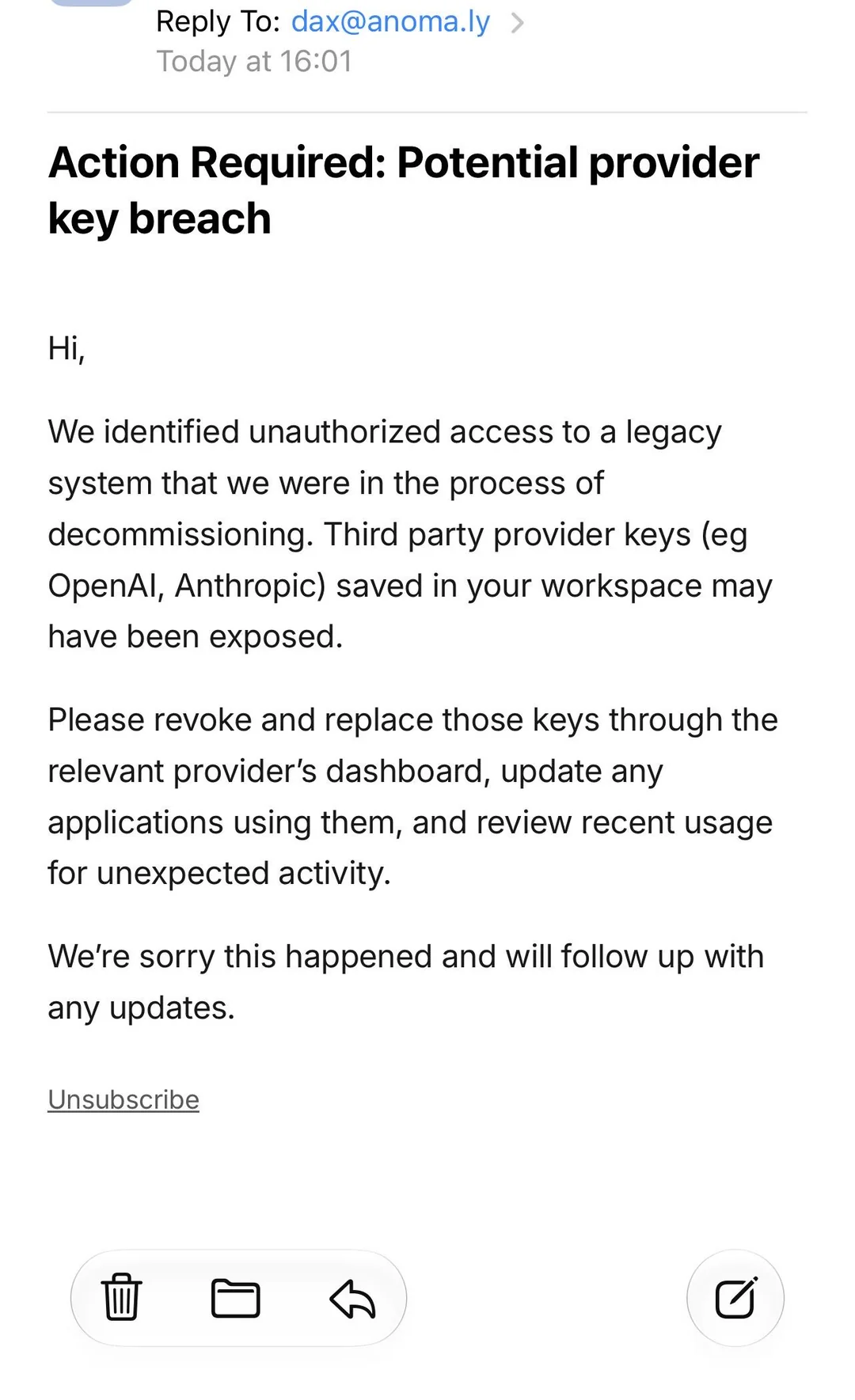
API keys saved in OpenCode workspaces may have been exposed after someone accessed a legacy system.
Users are reporting unexpected spending on connected AI accounts, with one putting the damage at $400. OpenCode has confirmed the breach and is working with three major AI providers.
OpenCode supports models from different AI providers, allowing developers to use the open-source coding tool with their own API keys. Now, OpenCode has emailed users warning that third-party keys saved in their workspaces may have been exposed in a breach. Several users say their provider accounts have already been charged for activity they did not authorize. (Yuval Goel / Notebookcheck)
Related: r/SecOpsDaily
Chinese online retailer Temu has agreed to settle data privacy claims raised by Texas and will restrict how it handles personal data from shoppers in the state, according to documents made public.
Temu faces several lawsuits from US states concerned that the company unlawfully harvests US user data that the Chinese government could access. Texas is the first to resolve such claims. It is also the first time the company has agreed to keep personal data on US servers and restrict when it can be sent to China, Texas officials said.
The company agreed to conduct annual independent product safety testing to identify products containing dangerous chemicals and materials. Temu must remove any products found to contain dangerous materials, terminate the seller and its affiliated stores, notify affected Texas consumers and issue full refunds.
Texas Attorney General Ken Paxton said the settlement also requires Temu "to implement rigorous new product audits and safety standards to protect consumers from dangerous materials in products, including clothing and children’s items."
He added it will prevent Temu from collecting and using Americans' data. (Jody Godoy and David Shepardson / Reuters)
Related: Wall Street Journal, Hoodline
The Central Depository, the entity through which all transactions are carried out at the Bucharest Stock Exchange (BVB) and which manages all data regarding transactions and contracts, was the target of a cyberattack.
The institution has informed users what to do. BVB announces that trading activity has not been and is not affected at all.
"At this moment, the Application is temporarily unavailable. From the information we have so far, following the cyber attack, personal data of our users were viewed, namely data used in the process of enrolling/creating user accounts: name and surname, address, personal numerical code, identity card series and number, e-mail address, telephone number, IBAN code, these have not been modified and/or altered.", shows the Central Depository.
The institution also indicates that it has already contracted a team of specialists and notified DNSC regarding the cyber attack. (Şerban Buşcu / Economica.net)
Related: Informat, SeeNews, The Romania Journal, Romania Insider
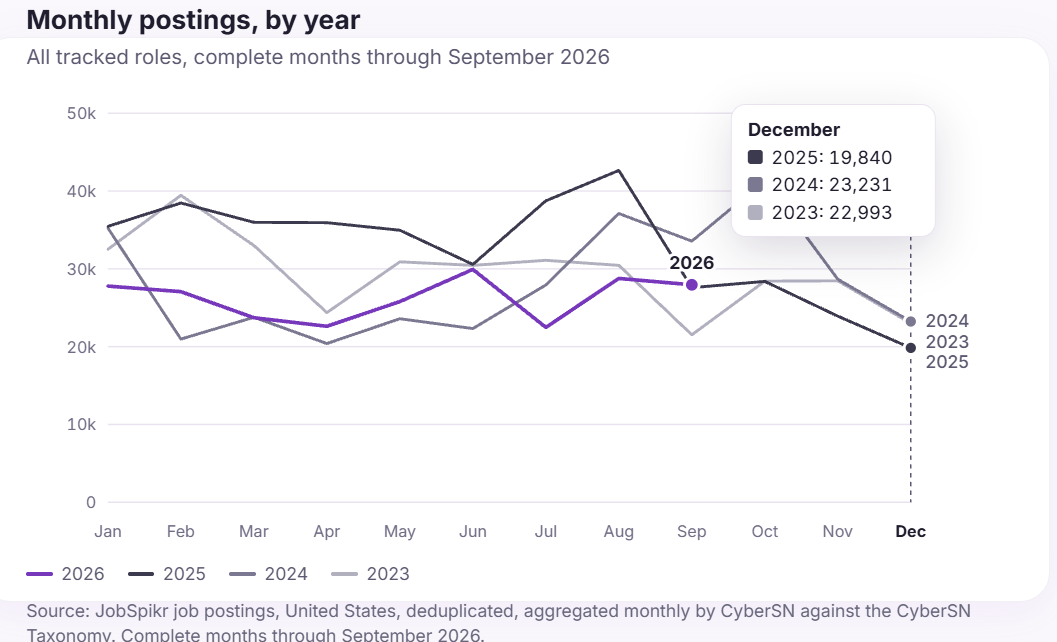
According to Data for CyberSN’s jobs report, there has been a decline in cybersecurity job postings to a new four-year low: 235,786 postings between January and September 2026 (down 26.4% from the 320,210 recorded in the same period of 2025).
While the total number of job postings has declined, there remain emerging and notable specific numbers. For example, two specific AI and data roles have seen dramatic growth: AI Security Engineer demand has increased by 268.3% while Cyber Data Scientist demand has grown 203.5% over last year. (Kevin Townsend / Security Week)
Related: CyberSN, Help Net Security
Reach Security has secured more than $50m in a Series B round led by Top Tier Capital Partners, while unveiling Reach Everywhere, a launch that pushes its security control intelligence into every environment where defensive decisions are made.
Alongside lead investor Top Tier Capital Partners, the round drew backing from Ballistic Ventures, In-Q-Tel, M12, Microsoft’s Venture Fund and existing investors. Reach plans to direct the capital towards product development, broader integration partnerships, expansion overseas and further growth across US enterprise and federal markets. (FinTech Global)
Related: Reach Security, The SaaS News, FinSMEs
Best Thing of the Day: Bow Down to MapQuest
MapQuest now allows readers to turn on the Surveillance Layer in Map Options to see known license plate readers from Flock Safety, Motorola Solutions (Vigilant), Genetec, Axis Communications, Axon, Leonardo (ELSAG), Neology, Rekor, PlateSmart, Ubicquia, Verkada, and other outdoor surveillance cameras.
Worst Thing of the Day: Don't Believe Ads Promoting Ossoff's Beauty Treatments
The Wesleyan Media Project found $137 million had been spent on 220 AI-generated ads through Oct. 11, mostly from Republicans.
Bonus Worst Thing of the Day: When Bad Crypto Buts Emerge and Nobody Notices
Bitcoin’s Lightning Network just had its roughest two weeks in years, with a bug that exposed almost $340 million in Bitcoin, and almost nobody outside a small circle of node operators noticed.
Closing Thought